
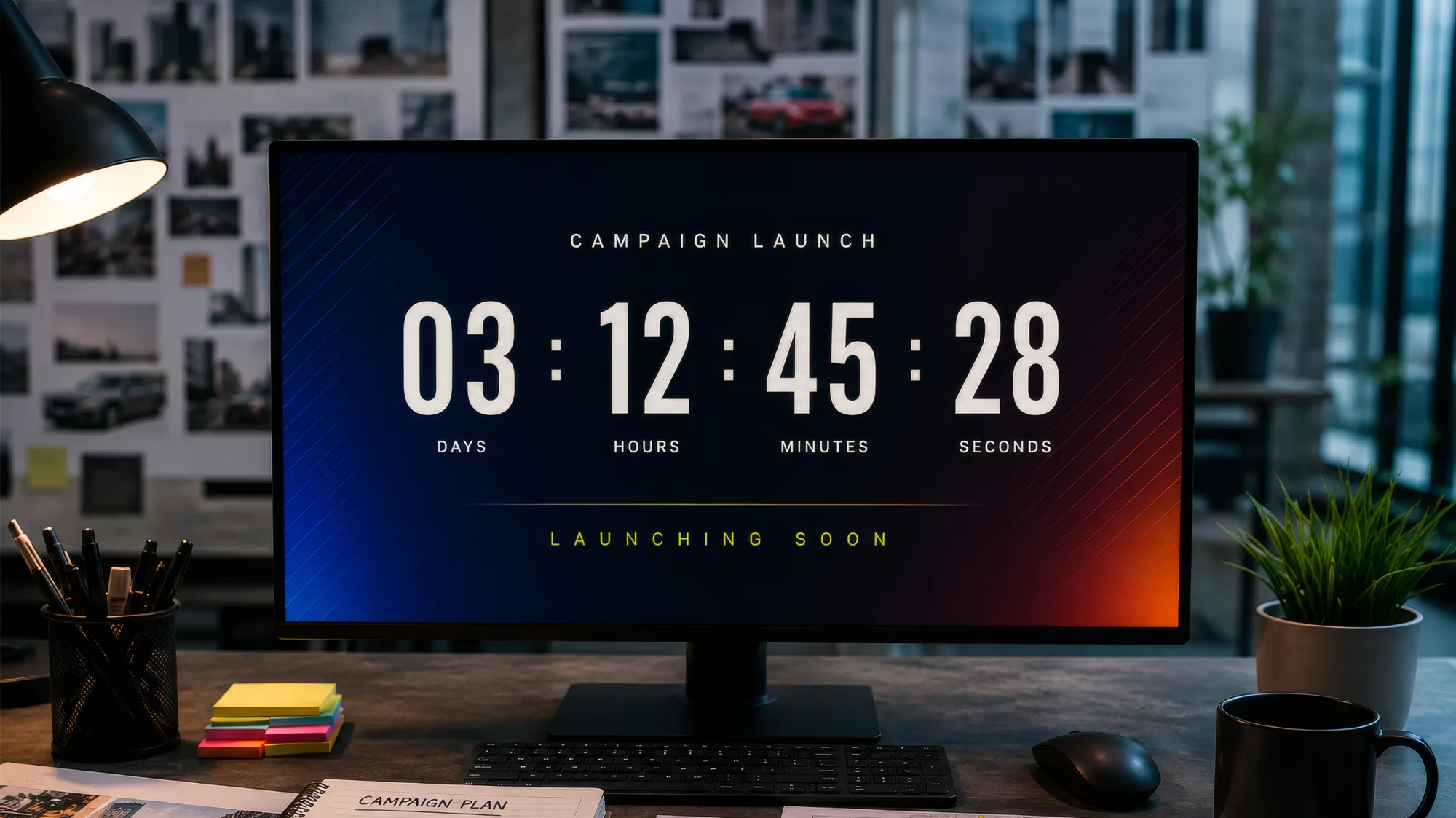
Outdoor advertising has long been associated with lengthy planning cycles, complex logistics, and weeks of coordination before a campaign ever reaches the street. While traditional billboard and transit campaigns often require months of preparation, advances in technology have made it possible to move much faster without sacrificing quality or impact.
Today’s advertisers expect the same speed and flexibility from outdoor advertising that they’ve come to expect from digital marketing. Whether promoting a product launch, seasonal campaign, grand opening, or live event, brands increasingly need to react to opportunities in real time rather than months in advance.
Here’s how modern outdoor advertising campaigns can move from concept to launch in just a matter of days.
Start with clear campaign goals
Before selecting locations or designing creative assets, establish exactly what success looks like.
Ask questions like:
- Are you building brand awareness?
- Driving foot traffic to a retail location?
- Supporting a product launch?
- Promoting an event?
- Reinforcing an existing digital campaign?
Having clear objectives helps determine where your campaign should run, how long it should last, and how success should ultimately be measured.
The more focused the campaign objective, the easier it becomes to make smart decisions throughout the planning process.
Design creative specifically for outdoor media
Outdoor advertising isn’t viewed the same way as digital ads.
People often experience outdoor advertisements while commuting, walking, or driving, giving them only a few seconds to absorb the message.
Successful outdoor creative typically includes:
- A clear headline
- Minimal copy
- Strong visual hierarchy
- Bold colors with high contrast
- Prominent branding
- A simple call to action
Rather than trying to communicate everything at once, outdoor advertising works best when it delivers one memorable message.
Simple designs are often the most effective.
Choose locations that match your audience
Great creative only performs well when it’s seen by the right audience.
Modern campaigns can target neighborhoods, business districts, entertainment venues, shopping corridors, commuter routes, and event locations depending on campaign objectives.
Instead of purchasing broad geographic coverage, advertisers can focus on areas where their audience naturally spends time.
This allows campaigns to become more relevant while making advertising budgets work harder.
Location strategy has become just as important as creative strategy.
Streamline production and deployment
Historically, one of the biggest bottlenecks in outdoor advertising has been production and installation.
Printing, scheduling, vendor coordination, and physical installation often stretched campaign timelines into weeks or even months.
Today’s technology-driven platforms help simplify much of this process by coordinating creative approvals, production, logistics, and deployment through a more connected workflow.
By reducing unnecessary handoffs and manual coordination, campaigns can reach the street significantly faster than traditional outdoor advertising models.
For brands working on time-sensitive launches, that speed can make a meaningful difference.
Monitor performance throughout the campaign
Launching the campaign is only the beginning.
Modern advertisers increasingly expect visibility into how campaigns are performing after deployment.
Campaign verification, deployment tracking, and ongoing reporting provide confidence that creative is running where and when it’s intended.
Combined with broader marketing analytics, these insights help advertisers better understand campaign effectiveness and make more informed decisions for future activations.
Outdoor advertising is becoming more measurable, transparent, and accountable than ever before.
The future of outdoor advertising is faster
The advertising landscape moves quickly, and outdoor media is evolving alongside it.
Brands no longer want to wait months to bring campaigns to life. They want the ability to respond to market opportunities, launch creative around major events, support product releases, and complement digital campaigns while momentum is highest.
As outdoor advertising continues to adopt smarter technology and more connected workflows, speed is becoming one of its greatest advantages.
Campaigns that once required months of planning can now be launched in days, giving brands the flexibility to move at the pace of modern marketing.
Have something you need on the street soon? Start a campaign.