
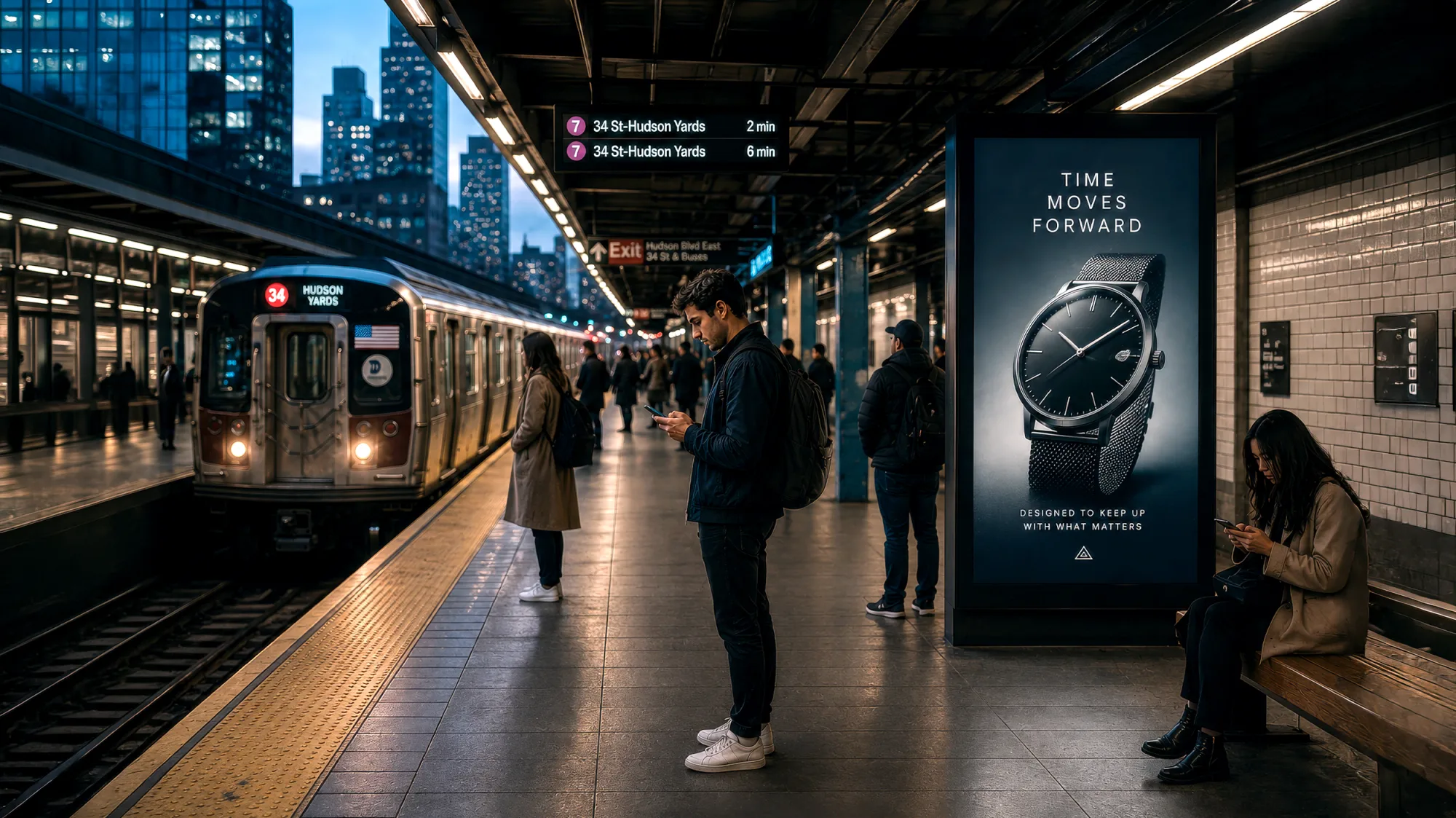
For years, marketing conversations have framed digital and physical advertising as competing strategies. Brands often ask which delivers a better return, reaches more customers, or offers greater flexibility.
The reality is that the most successful campaigns rarely choose one over the other.
Digital advertising excels at precision targeting, rapid optimization, and measurable engagement. Physical advertising builds awareness, reinforces messaging, and creates memorable brand experiences in the real world.
Rather than replacing each other, these channels work best when they’re planned together.
As consumer attention becomes increasingly fragmented, combining digital and physical advertising has become one of the most effective ways to build stronger campaigns.
The strengths of digital advertising
Digital advertising transformed marketing by giving brands unprecedented control over who sees their message and when.
Campaigns can launch quickly, audiences can be segmented with remarkable precision, and performance data is available almost immediately.
Whether through social media, search engines, streaming platforms, or display advertising, digital channels allow marketers to continuously optimize campaigns based on real-time results.
This flexibility makes digital an essential part of nearly every modern marketing strategy.
However, digital advertising also faces growing challenges. Consumers are exposed to thousands of online ads every day, competition continues to increase, and ad fatigue has become a common obstacle for brands trying to stand out.
The lasting impact of physical advertising
Physical advertising offers something digital often cannot: a real-world presence.
Outdoor advertising reaches people during their daily routines, creating repeated exposure in places where attention is naturally focused on the surrounding environment rather than another screen.
Whether someone passes the same campaign during a morning commute or notices it while shopping or attending an event, repeated real-world impressions help strengthen brand recognition over time.
Unlike many digital impressions that disappear with a scroll, physical advertising becomes part of the environment, allowing brands to maintain a consistent presence throughout a campaign.
Why the best campaigns combine both
The most effective marketing strategies recognize that each channel plays a different role.
Digital advertising often introduces a product, promotes an offer, or encourages immediate action.
Physical advertising reinforces that message through repeated visibility in the real world.
A customer might first discover a brand through a social media ad, later encounter the same campaign while commuting, and eventually make a purchase after seeing another reminder online.
Each interaction builds familiarity and trust.
Rather than competing for credit, digital and physical advertising work together to create a more consistent customer journey.
Consistency creates stronger brands
One of the greatest advantages of combining channels is consistency.
When creative assets, messaging, colors, and branding remain aligned across digital and physical touchpoints, customers are more likely to recognize and remember the campaign.
Consistency also helps reinforce brand identity over time.
Instead of treating outdoor advertising as a completely separate initiative, many marketers now develop campaigns that can extend naturally across websites, social media, email, retail environments, and outdoor media.
The result is a more unified experience regardless of where customers encounter the brand.
Measuring success across multiple channels
Measurement has become increasingly important for both digital and physical campaigns.
While digital marketing has long benefited from detailed analytics, advances in technology are making outdoor advertising more measurable than ever before.
Campaign verification, audience insights, location intelligence, and performance reporting are helping brands better understand how physical advertising contributes to broader marketing objectives.
Rather than evaluating channels independently, marketers are increasingly measuring how each supports the overall campaign.
Looking at the complete customer journey often provides more meaningful insights than focusing on a single channel in isolation.
The future is integrated marketing
Today’s consumers move seamlessly between digital and physical environments throughout the day.
They browse online, commute to work, visit stores, attend events, and interact with brands across multiple touchpoints.
Successful marketing strategies reflect that reality.
Instead of asking whether digital or physical advertising is better, marketers are asking how each channel can strengthen the other.
By combining the precision of digital advertising with the visibility and memorability of physical media, brands can create campaigns that reach people more consistently and leave a lasting impression.
As marketing continues to evolve, the future won’t belong to one channel over another. It will belong to brands that build connected experiences across both the digital and physical worlds.
Ready to add the physical half? See how Stic campaigns work.